
Sunflower County Multi-Day Arrest Log
The Sheriff Department posts no 72-hour log, weekly booking list, or any other multi-day roster. Its site shares agency and jail details. But it says nothing about archive depth, refresh rates, roll-off rules, or booking photos. Indianola, Ruleville, and Moorhead police list no daily blotter page either.
So the method has to change. Start with the official sheriff source to learn which agency made the arrest. Then ask that record holder for a date range. A jail booking sheet shows intake. A city incident report covers the police event. A court docket tracks the case after charges were filed. None of these can stand in for another. A thorough Sunflower County arrest-log search pulls from each.
Read Sunflower County Arrest Reports
A good multi-day search leans on names, dates, and jurisdictions. It skips the unofficial indexes. Move from the newest official record toward older material, and label each result as custody, police report, or court case.
- Call Sunflower County Jail at 662-887-2121 if current custody still matters.
- Ask the arresting police department for its incident or arrest report when known.
- Request the booking record, jail-docket entry, bond disposition, and discharge or transfer date from the sheriff.
- Search the Enterprise-Tocsin Crime section by name, place, agency, and date as a news lead.
- Ask the proper clerk for the charging document, docket entries, and disposition.
For something that may have happened today, the Arrests Last 24 Hours process fits better. The blotter method handles multi-day spans, delayed reporting, and older traces. It adds context, yet it cannot turn selective news stories into a complete county booking list.
Sunflower Arrest-Log Record Fields
No official online log spells out which fields the public can see. Mississippi's county retention schedule and old BluHorse reports suggest useful fields to request. They also show why an aging export should never pass for a live list.
| Field | How to read it |
|---|---|
| Name and alias | Match carefully to avoid confusing two people. |
| Book or commitment date | Places the admission within the requested range. |
| Agency and jurisdiction | Points to the incident-report custodian. |
| Charge or statute | States the charge entered at booking. |
| Bond and disposition | May distinguish held, bonded, or released status. |
| Case number | Can connect the intake with a court inquiry. |
| Discharge date | Shows when county custody ended. |
| Photograph | No current county web-publication policy was verified. |
Charges can shift after booking. Prosecutors may amend or decline them, and courts sometimes dismiss a case outright. Check the later court docket before describing any outcome.
Sunflower Weekend Arrest Gaps
The county posts no schedule for weekend or holiday bookings. No roll-off window is documented. Claiming that Monday's visible items capture every arrest from Friday through Sunday would be reckless. Intake, release, transfer, and records processing all move on separate clocks.
For a specific weekend, request records by start and end date. Add the person's name if you have it. Ask the sheriff which jurisdiction made the arrest. City cases need a separate report. Someone released before the next business day may not appear in a current-custody check. The booking record still exists.
Sunflower Arrest Archives and Retention
The MDAH county schedule makes the jail docket permanent. Booking records stay ten years after release; inmate case files last twenty-five. Arrest reports carry longer periods set by offense category. Retention rules do not mean online publication. Legal or investigative holds can stretch any period.
Requesting older material works best when you name the office. Give the record series and the years. The MDAH Local Government Records Office can explain schedules and transfers. The county itself remains the first stop for recent arrests. Gaps exist. A DOJ filing reported sheriff files before 1970 as unavailable. That hardly proves a given arrest never happened. Use the MDAH county inventory to explore the archive discovery interface.
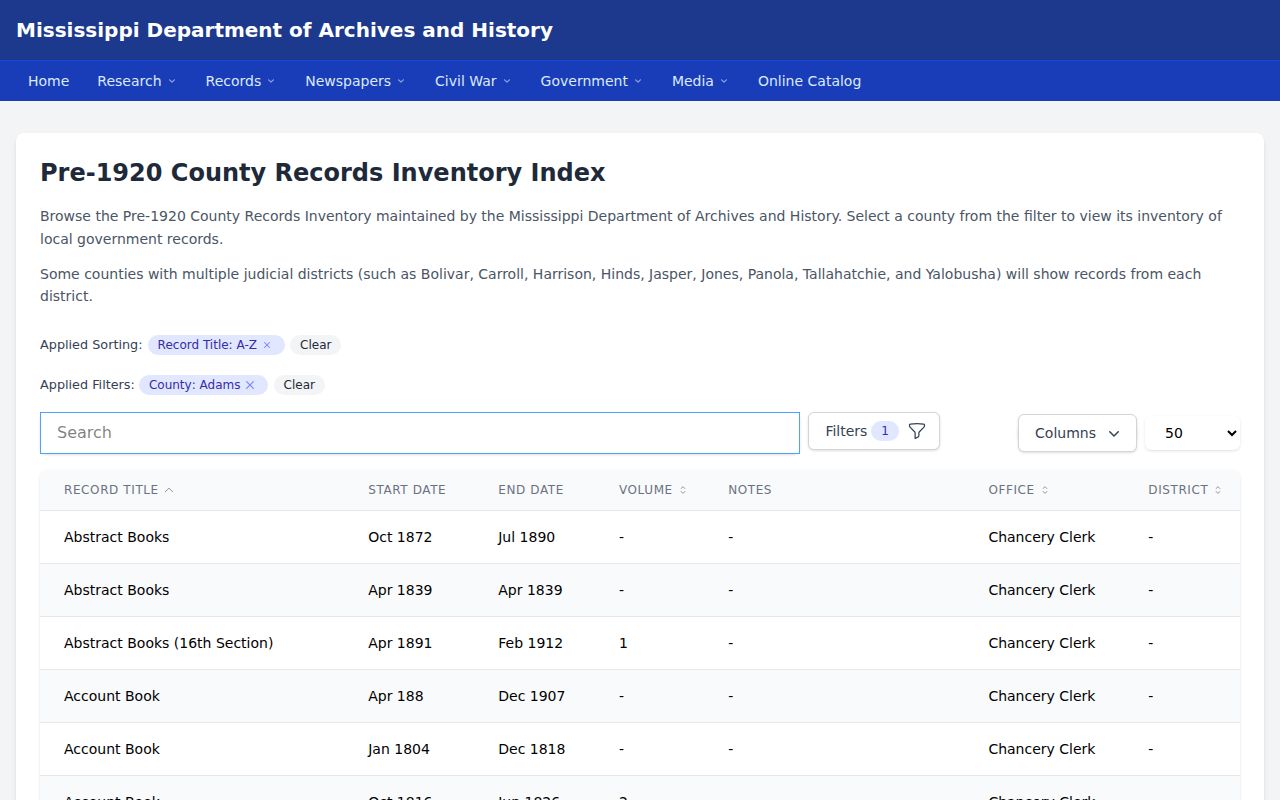
Treat the inventory as a historical lead. It is not a current jail roster or proof that a booking photograph survived.
Sunflower Crime News Is Selective
Enterprise-Tocsin offers the best local news route through its Crime section. The paper updates online weekly. It picks stories for news value, often relying on agency accounts that shift once a case reaches court. It is not a sheriff-maintained list of every admission. Visit the Enterprise-Tocsin Crime section for that local reporting view.
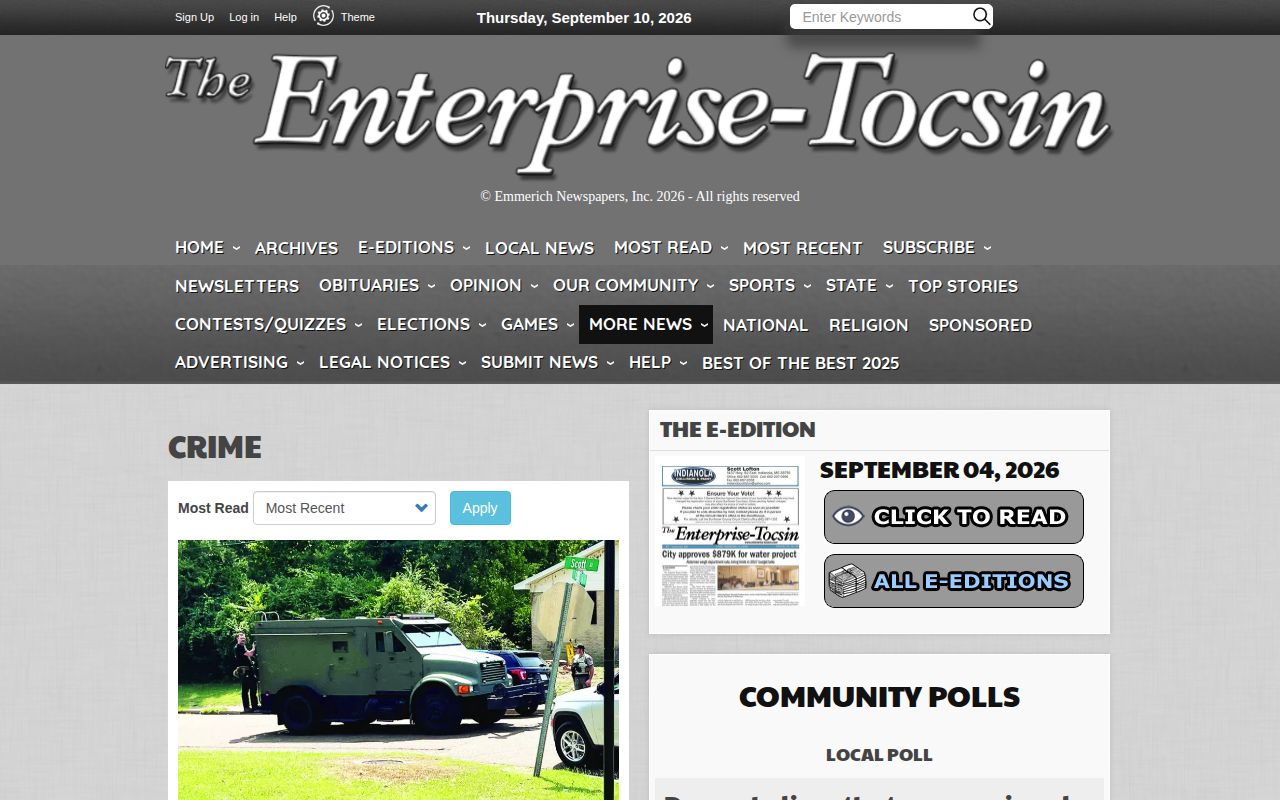
Start with the story, not the search box. A dated news lead can put a name near a Sunflower County arrest, but the sheriff, the arresting agency, or the court still holds the record that counts. Treat headlines as leads only.
Coverage of Sunflower County crime is spotty. Mississippi Today covers major regional and city cases, though it follows no fixed blotter schedule for this county. Busted Newspaper and Mugshots.com both maintain county-level paths, but their index material is stale. JailExchange is an unofficial directory. RecentlyBooked lists no current Sunflower section, and Arrests.org and Mugshots.zone offer no dependable local route either.
The age signals are concrete. Busted Newspaper's visible Sunflower entries carry 2020 dates. Mugshots.com's county route behaves like a historical index built around older arrest-date navigation. Neither helps much with who was booked this week. Weigh them well below a current answer from the sheriff or the court.
Archives still earn their keep, though. Vague spellings and fuzzy dates often yield to a search combining a name, the town, an agency, and a case term. Write down the story's publication date separately from the arrest date. And if a report mentions a later plea or conviction, keep that outcome tied to its own event rather than the original booking.
The newspaper's home page offers additional context on its site.

Neither image serves as a gallery or an official custody source. Skip them for answers.
When the web turns up nothing, go narrow and go written. Ask the sheriff's office for the jail docket or booking record. Cover a stated date range. Ask the city department for its incident or arrest report. Then ask the court clerk for the filed charge and disposition. Three small requests beat one office fumbling for a history it never held.
The permanent jail docket is often the strongest county lead. Web pages roll off or never exist. Request the admission and discharge entry by name and date range. For depth, name the booking-record series. Ask for the arresting agency and jurisdiction. Ask for the charge as entered, bond disposition, and release or transfer date. Ask separately whether a booking image exists and whether it can be released.
Custody is one thing; a case is another. For case matters, the Circuit Clerk is the right endpoint. The clerk's office reports no online case search. It asks that requests arrive by email, mail, or in person. Ask for the charging document, the docket, and the final disposition. Fees vary by item. The office says an available record can take up to fourteen business days. Those court files can show an outcome no arrest log contains.
Dates keep everything honest. Publication, arrest, jail commitment, and disposition dates rarely match. The gaps explain why a story surfaces days late. They also explain why a person's current status can't be read off the first report.